
5 Ways Accounting Firms Collect Client Documents in Microsoft 365 (And Why 4 of Them Fail) 

Accounting firms live inside Microsoft 365. Outlook, SharePoint, Teams, OneDrive — they’re already the backbone of daily work. 

Yet when it comes to collecting documents from clients, many firms still struggle with: 

  • Missing files 
  • Endless follow-ups 
  • Disorganized SharePoint folders 
  • Delayed tax work and frustrated staff 

The problem isn’t Microsoft 365. 

It’s how document collection is implemented. 

Below are the five most common ways accounting firms collect client documents using Microsoft 365, explained from a SharePoint practitioner’s perspective — and why only one approach truly works at scale. 

1. Email Attachments (Outlook) 

How it works 

Firms email clients a list of required documents and ask them to reply with attachments. 

Why firms still use it 

  • It’s familiar 
  • No setup required 
  • Clients already use email 

Why it fails 

From an operational standpoint, email is the least reliable intake method: 

  • Attachments arrive in different inboxes 
  • Files get buried in long threads 
  • Versions are mixed 
  • Staff must manually download, rename, and upload to SharePoint 

During tax season, this turns into pure chaos. 

Email is a communication tool — not a document collection system. 

Verdict:  Fails immediately at scale 

2. Sharing a OneDrive or SharePoint Folder Link 

How it works 

The firm creates a folder in SharePoint or OneDrive and shares the link with the client. 

Why it feels better than email 

  • Files land directly in Microsoft storage 
  • No attachments clutter inboxes 
  • Permissions are controlled 

Why it still breaks 

This approach fails in subtle but critical ways: 

  • Clients don’t know what to upload 
  • No checklist or structure 
  • No visibility into what’s missing 
  • Clients accidentally upload to the wrong folder 
  • No reminders when documents are incomplete 

Staff still end up chasing clients — just with links instead of attachments. 

Verdict:  Better than email, but still manual and unreliable 

3. Inviting Clients into SharePoint as External Users 

How it works 

Clients are invited as guest users into SharePoint sites or libraries. 

Why firms attempt this 

  • Strong security 
  • Native SharePoint permissions 
  • Centralized storage 

Why clients hate it 

From a client experience perspective: 

  • Requires Microsoft account or verification 
  • Confusing guest access prompts 
  • Permission issues are common 
  • High support overhead 

From an admin perspective: 

  • Guest access governance 
  • Security reviews 
  • Ongoing access management 

This approach technically works — but introduces massive friction for clients. 

Verdict: Secure, but impractical for real-world client intake 

4. SharePoint “Request Files” Feature 

How it works 

SharePoint allows users to generate a Request Files link that lets external users upload files without seeing the folder. 

Why this looks promising 

  • No login required for clients 
  • Files upload directly to SharePoint 
  • More secure than email 

Where it falls short 

While this feature is useful, it has serious limitations for accounting workflows: 

  • No checklist of required documents 
  • No enforcement of “one file per requirement” 
  • No automated follow-ups 
  • No progress tracking 
  • No workflow triggers when files arrive 
  • No client-friendly guidance 

It’s a single upload link, not a complete intake process. 

Verdict: Good building block, not a complete solution 

5. Automated Document Requests Inside Microsoft Teams (The Only One That Works) 

How it works 

Instead of sharing folders or inviting users, firms send secure upload links tied to: 

  • A predefined document checklist 
  • Automatic SharePoint folder creation 
  • Real-time tracking 
  • Team notifications in Microsoft Teams 

Clients: 

  • Click a link 
  • Upload exactly what’s requested 
  • Never log in 
  • Never see SharePoint 

Staff: 

  • See progress instantly 
  • Receive Teams notifications 
  • Get files auto organized and named 
  • Trigger downstream tasks automatically 

This approach aligns with how Microsoft 365 is meant to be used: 

  • SharePoint for storage 
  • Teams for work 
  • Automation for coordination 

This is the model behind Trovve Vault — built specifically for professional services firms running on Microsoft 365. 

Verdict: Scalable, client-friendly, and operationally sound 

Why Most Firms Think SharePoint Is the Problem (But It’s Not) 

SharePoint is incredibly powerful — but it was never designed to: 

  • Chase clients 
  • Enforce document checklists 
  • Send reminders 
  • Coordinate work across teams 

When firms say, “SharePoint is messy”, what they really mean is: 

“We’re using SharePoint without an intake layer.” 

Final Takeaway 

If your firm already uses Microsoft 365, you don’t need: 

  • Another portal 
  • Another login 
  • Another system outside your tenant 

You need a proper document intake workflow that sits on top of SharePoint and Teams. 

That’s exactly why tools like Trovve Vault exist. 

Want to See This in Action? 

We’re onboarding a small group of accounting firms looking to eliminate document chasing — without changing how clients work. 

Request early access to Trovve Vault 

FAQs 

1. What is the best way to collect client documents in Microsoft 365? 

The most effective approach is using automated document requests layered on top of SharePoint and Microsoft Teams. This combines checklists, automation, tracking, and notifications—without forcing clients to log in. 

2. Why is email a bad way to collect client documents? 

Email is unreliable at scale. Attachments get buried; versions are mixed, files must be manually processed, and staff spend excessive time chasing and organizing documents. 

3. Is SharePoint Request Files good enough for accounting firms? 

SharePoint Request Files is useful but incomplete. It allows uploads without login, but lacks document checklists, progress tracking, reminders, and workflow automation needed for tax and accounting work. 

4. Why shouldn’t firms invite clients as external SharePoint users? 

External guest access introduces friction for clients (logins, verification issues) and increases security, governance, and support overhead for firms—making it impractical for routine document intake. 

5. How does Microsoft Teams improve document collection? 

Teams provide real-time visibility and notifications. When document intake is automated and connected to Teams, staff instantly see progress, know what’s missing, and can trigger downstream work without manual follow-up. 

6. Is SharePoint the reason our document management is messy? 

No. SharePoint is a storage platform, not an intake system. Most issues arise because firms lack an intake layer to enforce structure, automate reminders, and coordinate work. 

7. Do clients need Microsoft accounts to upload documents? 

Not with the right setup. Modern intake workflows allow clients to upload securely via links—no Microsoft login, no SharePoint access, no confusion. 

8. Can Microsoft 365 handle client document intake without third-party portals? 

Yes. When done correctly, Microsoft 365 (SharePoint + Teams + Automation) can handle document intake natively—without forcing clients into new portals or systems outside your tenant.

 

How Law Firms Collect Client Documents in Microsoft 365

5 Common Approaches — and Why Most Break Down 


Law firms rely heavily on Microsoft 365. 

Outlook, SharePoint, Teams, and OneDrive are central to how legal work gets done. 

Yet one operational problem persists across firms of all sizes: 

Getting clients to submit the right documents, on time, in the right place. 

Whether it’s intake forms, signed agreements, identity verification, or discovery materials, the way firms collect documents often creates: 

  • Repeated follow-ups 
  • Disorganized matter folders 
  • Bottlenecks for paralegals 
  • Risk around deadlines and compliance 

The issue isn’t Microsoft 365 itself — it’s the lack of a structured intake process layered on top of it. 

Below are the five most common document collection methods law firms use within Microsoft 365 today, and why only one holds up under real-world legal workloads. 

1. Asking Clients to Email Documents 

Typical workflow 

Clients are instructed to reply to an email with the requested files attached. 

Why it’s still common 

  • Requires no setup 
  • Clients understand email 
  • Works for single, low-risk documents 

Where it fails 

In practice, email quickly becomes unmanageable: 

  • Attachments land in different inboxes 
  • Files get buried in long threads 
  • No consistent naming or version control 
  • Staff must manually move documents into SharePoint matter folders 

For matters involving multiple documents or strict timelines, this approach introduces unnecessary risk. 

Assessment:  Not sustainable for legal work 

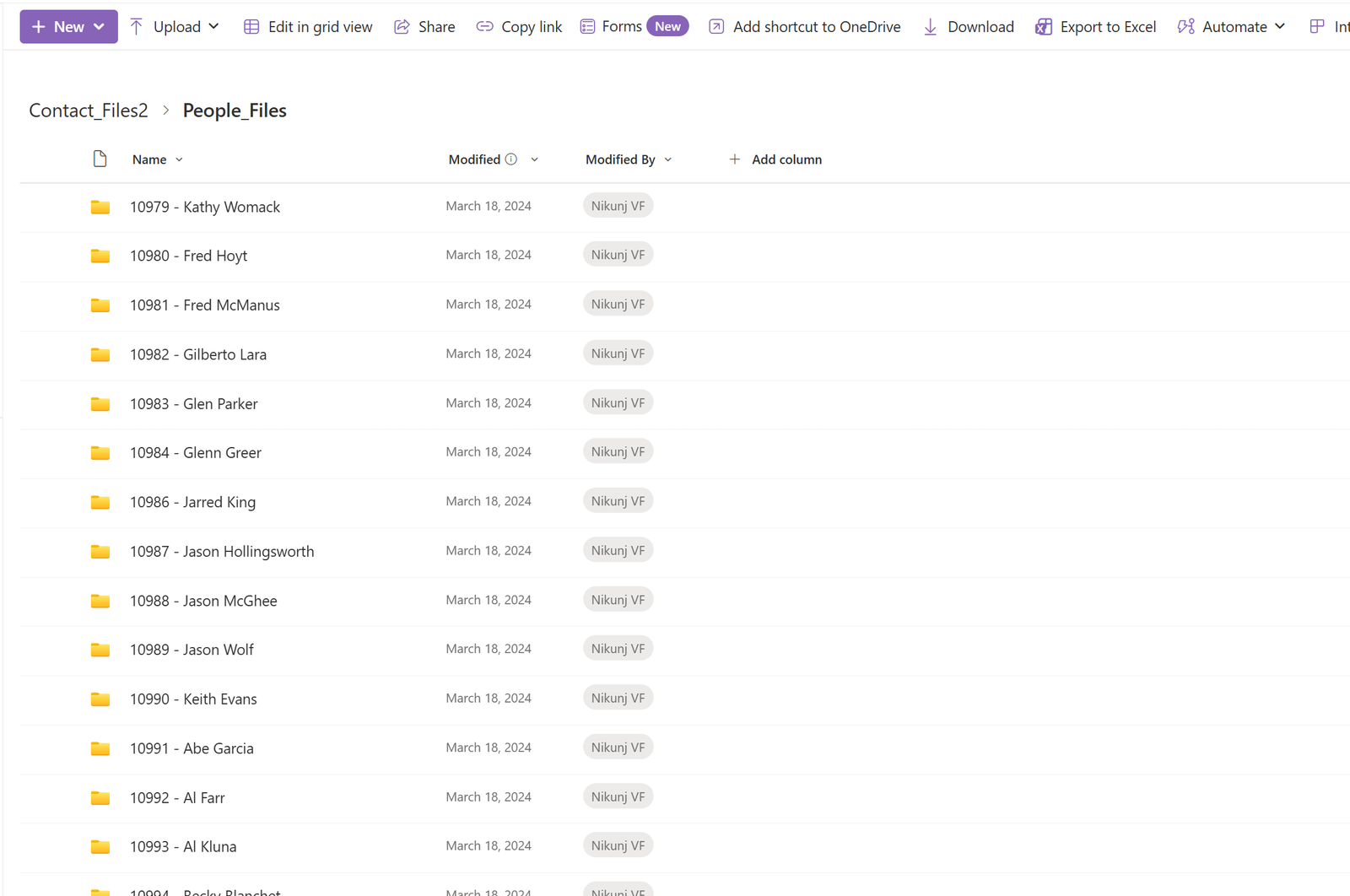
2. Sending Clients a Shared Folder Link 

Typical workflow 

A SharePoint or OneDrive folder is created for a matter and shared externally. 

Why firms try it 

  • Documents upload directly to SharePoint 
  • Avoids email attachments 
  • Uses existing Microsoft permissions 

Why it causes friction 

This method lacks structure: 

  • Clients aren’t sure what to upload 
  • Files often end up in incorrect folders 
  • No visibility into what’s outstanding 
  • No automatic reminders or deadlines 

The burden shifts from email management to folder cleanup. 

Assessment: Some improvement, still heavily manual 

Shared SharePoint Folder with Mixed Client Uploads

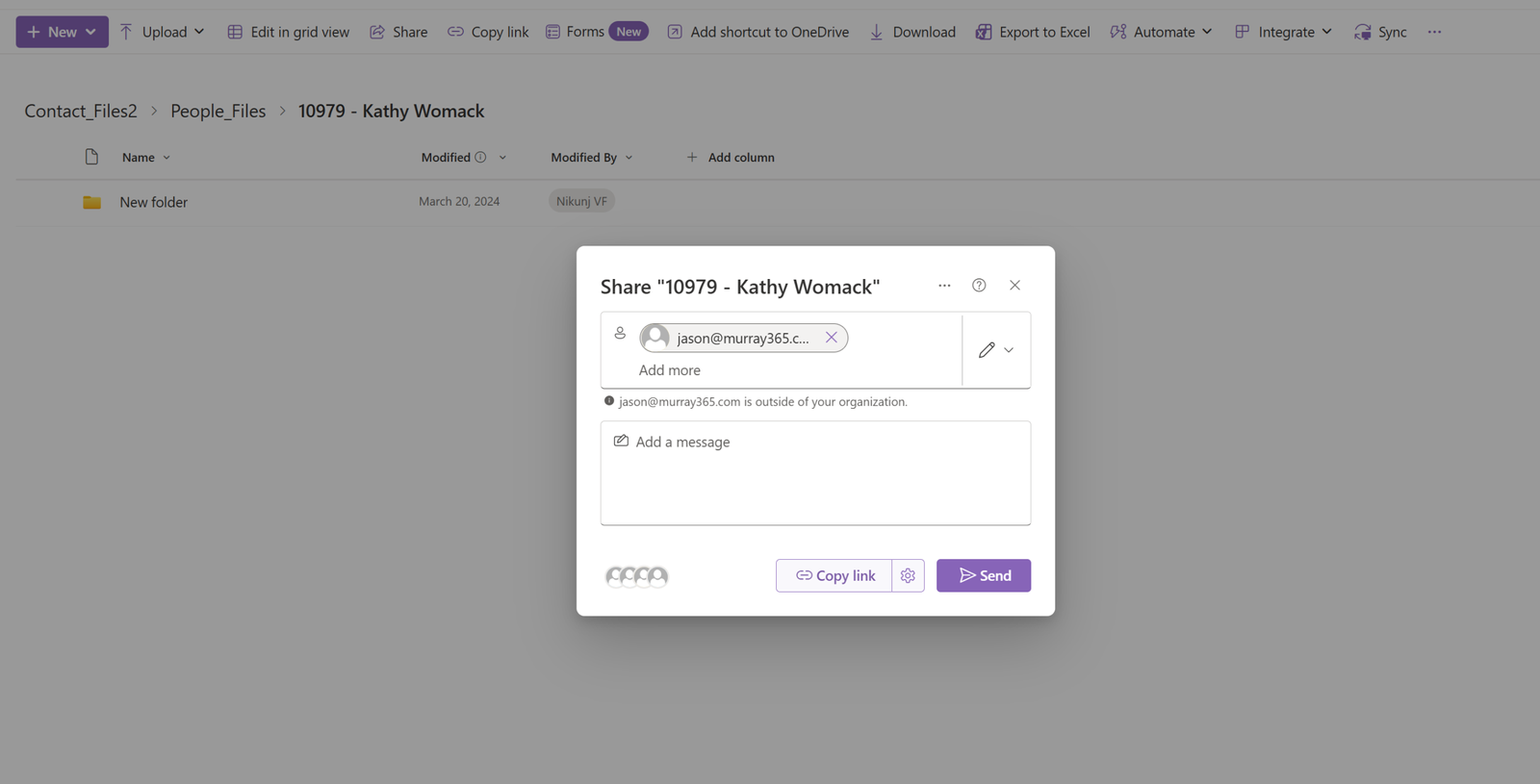
3. Granting Clients Guest Access to SharePoint 

Typical workflow 

Clients are added as external users to SharePoint sites or libraries. 

Why it seems appealing 

  • Strong access controls 

  • Centralized document access 

  • Fully native to Microsoft 365 

Why it rarely works well 

From the client’s perspective: 

  • Confusing sign-in steps 

  • Verification codes and access issues 

  • Frequent “I can’t log in” emails 

From the firm’s side: 

  • Ongoing guest access management 

  • Security reviews and offboarding concerns 

  • Administrative overhead when matters close 

Technically sound, but operationally inefficient. 

Assessment: Too complex for client-facing intake 

Microsoft guest invitation email

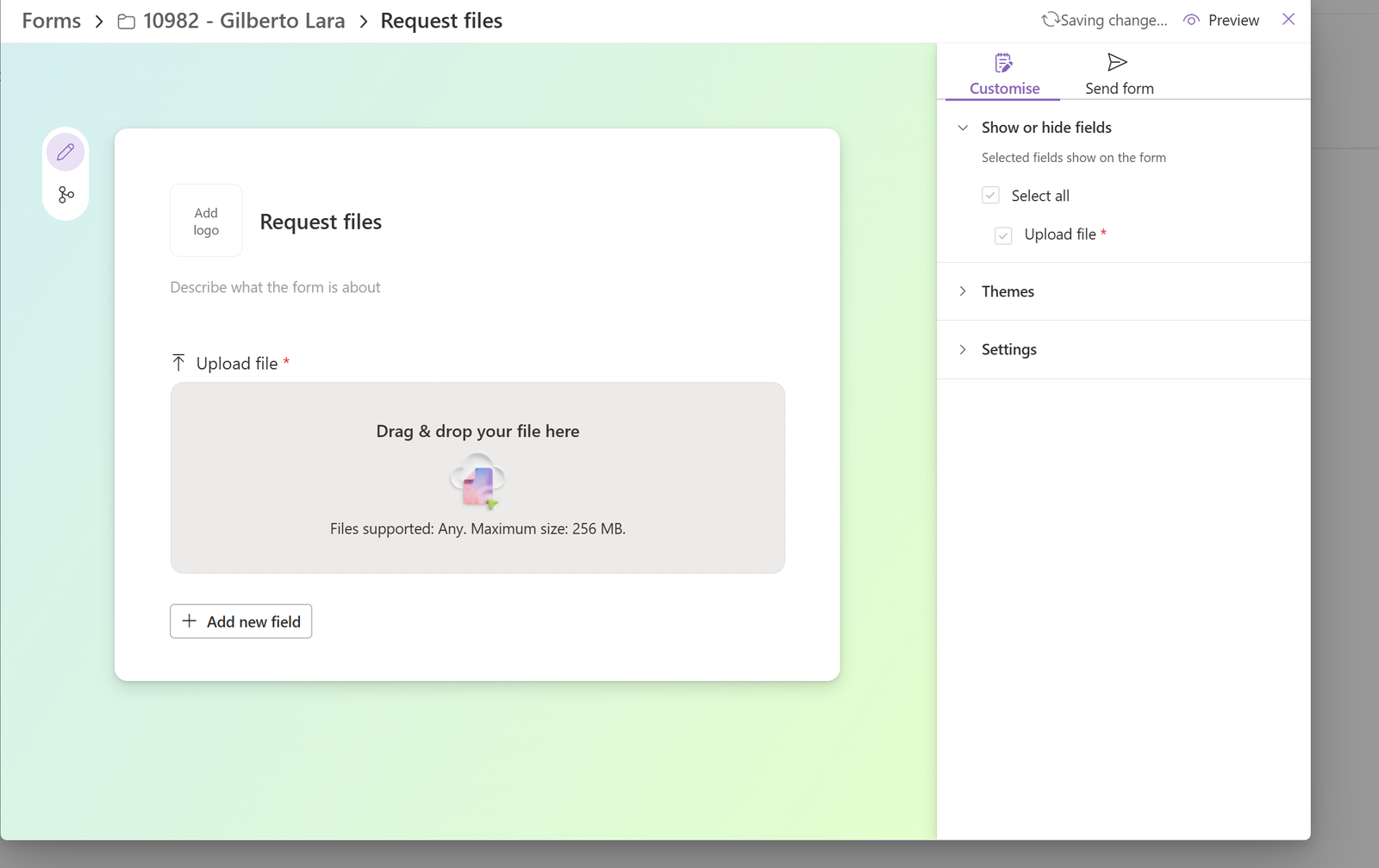
4. Using SharePoint’s “Request Files” Option 

Typical workflow 

A Request Files link is generated, so external users can upload documents without logging in. 

Why firms consider it 

  • No client account required 

  • Files land directly in SharePoint 

  • More secure than email attachments 

Why it falls short for legal workflows 

While useful, this feature has limitations: 

  • No guided checklist for required documents 

  • No way to enforce one document per requirement 

  • No completion tracking 

  • No reminders or follow-up logic 

  • No connection to matter-level tasks 

It’s a helpful SharePoint feature — not a complete intake solution. 

Assessment: Useful component, incomplete process 

SharePoint Request Files configuration panel

5. Structured Client Document Intake Built Around Microsoft Teams 

Typical workflow 

Clients receive a secure upload link tied to: 

  • A predefined document list 

  • Automatic SharePoint folder creation 

  • Real-time status tracking 

  • Notifications inside Microsoft Teams 

  • Optional task creation when files arrive 

Clients: 

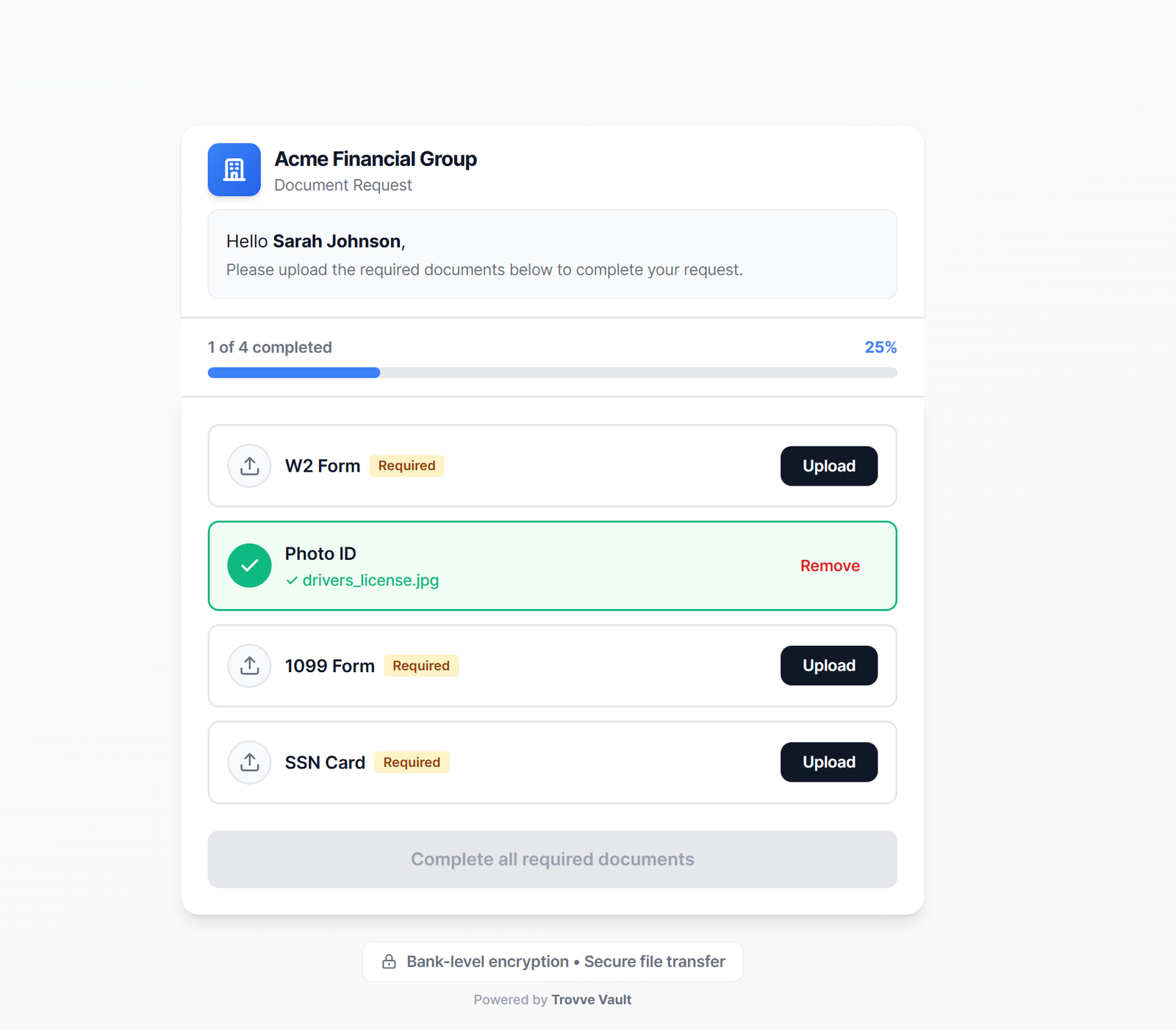
  • Upload documents through a simple link 

  • Never log in 

  • Never interact directly with SharePoint 

Firm staff: 

  • See exactly what’s been submitted 

  • Get notified when items are completed 

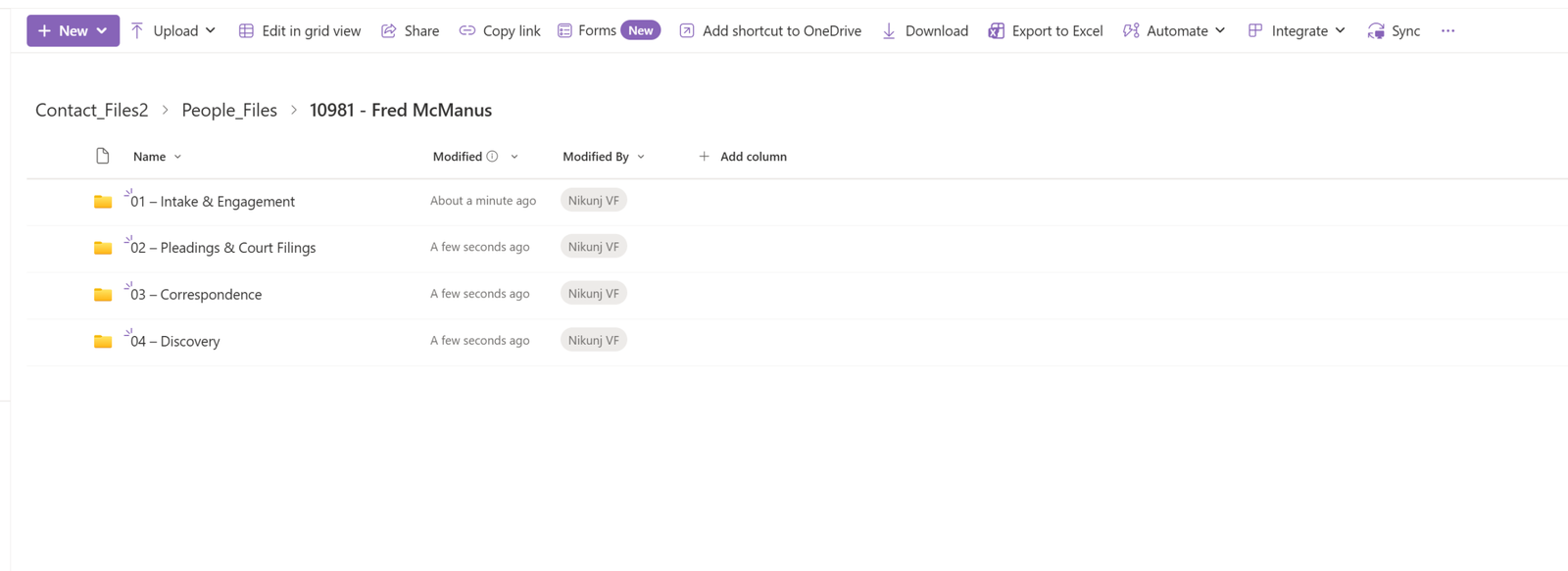
  • Receive files automatically organized by matter 

  • Trigger next steps without manual coordination 

This approach aligns with how Microsoft 365 is meant to function in professional services environments. 

This is the model implemented by Trovve Vault

Client upload interface


Auto-created SharePoint matter folders

Assessment: Scalable, secure, and client-friendly 

Why SharePoint Often Gets Blamed 

SharePoint is excellent at storing and securing documents. 

What it does not do on its own is: 

  • Manage client submissions 

  • Track outstanding requirements 

  • Enforce intake standards 

  • Coordinate internal follow-up work 

When firms feel their document process is “messy,” it’s usually because the intake layer is missing

Key Takeaway for Law Firms 

If your firm already operates on Microsoft 365, adding another portal or system is rarely the answer. 

What’s needed is a structured, client-friendly intake process that sits on top of SharePoint and Microsoft Teams — not outside of them. 

That’s exactly the gap Trovve Vault is designed to fill. 

See How This Works in Practice 

We’re onboarding a limited number of law firms that want to streamline document collection without adding portals or client logins. 

Request early access to Trovve Vault 

FAQs 

1. What is the best way for law firms to collect client documents in Microsoft 365? 

The most effective approach is a structured document intake process layered on top of Microsoft 365, rather than relying on email or ad-hoc SharePoint folders. This includes predefined document lists, automatic folder organization in SharePoint, status tracking, and internal notifications—often coordinated through Microsoft Teams. 

2. Why is email a poor method for collecting legal documents from clients? 

Email creates risks and inefficiencies. Attachments are easily buried, misnamed, duplicated, or forgotten. Staff must manually move files into SharePoint, increasing the chance of errors, missed deadlines, and compliance issues—especially matters involving multiple documents or time-sensitive filings. 

3. Can SharePoint alone manage client document intake for law firms? 

No. While SharePoint is excellent for document storage and security, it does not manage client submissions, track outstanding documents, enforce intake standards, or automate follow-up. Without an intake layer, firms are left with manual work and inconsistent processes. 

4. Is SharePoint’s “Request Files” feature secure for client uploads? 

Yes, SharePoint’s Request Files feature is secure and avoids email attachments. However, it is not a complete intake solution. It lacks document checklists, completion tracking, reminders, and matter-level visibility—making it unsuitable as a standalone workflow for legal intake. 

5. Why is granting clients guest access to SharePoint often unsuccessful? 

Guest access introduces friction for clients and overhead for firms. Clients frequently struggle with sign-ins and verification, while firms must manage external user access, security reviews, and offboarding. The result is a technically sound but operationally inefficient process. 

6. Do law firms need a separate client portal to fix document collection issues? 

Not necessarily. For firms already using Microsoft 365, adding another portal often increases complexity. A better approach is enhancing existing tools—SharePoint and Microsoft Teams—with a structured intake process that clients can use without logging in. 

7. How does Microsoft Teams fit into legal document intake? 

Microsoft Teams acts as the operational hub. When document intake is integrated with Teams, staff can receive notifications, track submission status, trigger tasks, and coordinate next steps without switching systems—keeping intake aligned with daily legal workflows. 

8. What problems does structure document intake solve for legal teams? 

Structured intake reduces: 

  • Repeated client follow-ups 

  • Disorganized matter folders 

  • Paralegal and admin bottlenecks 

  • Missed deadlines and compliance risk 

It also improves visibility, accountability, and consistency across matters. 

9. What makes a document intake process “client-friendly”? 

A client-friendly process: 

  • Requires no account or login 

  • Clearly lists required documents 

  • Allows simple uploads via secure links 

  • Provides clarity on what’s complete and what’s outstanding 

This reduces confusion and speeds up submission. 

10. How is Trovve Vault different from standard SharePoint workflows? 

Trovve Vault adds the missing intake layer on top of Microsoft 365. It combines structured document requests, automatic SharePoint organization, real-time status tracking, and Microsoft Teams notifications—without requiring clients to interact directly with SharePoint or log into a portal.